Type this phrase into Google and you’ll get a strange mix: a drama page, a book listing, a Reddit thread, a finance guide and a travel article. That’s because “The Bond” and “China” overlap in at least four unrelated ways. This guide sorts them out, reviews what’s worth your time, and answers the questions people actually type next.
What is “Review: The Bond [China]”? (Quick Answer)

Review: The Bond [China] most often refers to the 2021 Chinese family drama The Bond (Qiao Jia De Er Nu), or to a China-related book listing with a review section. The same words also pull in articles about China’s government bonds and Treasury holdings. Check which one you want in the table below before reading further.
Which “The Bond” Are You Looking For?

Search engines treat the phrase as one query, but the people typing it want different things. The top results prove it. They include a TV series page, a Chinese-edition textbook on bonds, a Drama Sanctuary review, a Reddit thread on r/CDrama, an ICMA market guide and a paper on ESG in China.
| What you want | What to search instead | Best section below |
|---|---|---|
| A review of the 2021 Chinese drama | “The Bond Qiao Jia De Er Nu review” | Review: The Bond (2021 Drama) |
| A book listing with ratings and reviews | The exact book title plus author | How to Read a Book Listing |
| Books to understand China | “best books on modern China” | Book Recommendations |
| News on China selling US debt | “China US Treasury holdings TIC data” | China and US Treasuries |
| Chinese government bond basics | “China Government Bonds yield” | Why Chinese Investors Buy Bonds |
| Novels (Bond, le Carre, Mieville, Lost Tomb) | Author name plus title | Fiction Corner |
If your intent doesn’t match any row, the closest fit is probably the drama, since that is what most non-finance searchers are after.
Review: The Bond (2021 Chinese Drama)

The Bond is a Chinese family drama released in 2021, titled Qiao Jia De Er Nu in Chinese, which translates roughly as “the children of the Qiao family.” Coverage on r/CDrama, Drama Sanctuary and a few personal blogs treats it as an ordinary-people story: a family, its children, and the pressures that pull relatives apart and back together.
I can’t give you a verified episode count, cast list or streaming region from memory, and those details change by platform. Check the drama’s page on a database such as MyDramaList before you commit your evenings.
What reviewers tend to look for in this kind of drama
Family dramas live or die on a few things. Here’s the checklist I’d use before pressing play.
- Pacing. Long domestic dramas can sag in the middle. Look for reviewers who mention episodes 15 to 25 specifically.
- Believable conflict. Money, marriage, housing and parents’ expectations beat melodrama.
- Period detail. Dramas that span decades earn trust through small things like clothes, jobs and household objects.
- Ending. Many viewers forgive a slow middle if the finale lands.
Who should watch it
If you like slice-of-life storytelling over wuxia or palace intrigue, this is your lane. If you want fast plotting and plot twists every episode, skim a few reviews first. A drama like this rewards patience, not binge-speed.
Where to read opinions
Three sources show up in the SERP, and each gives a different angle. Drama Sanctuary writes structured episode-level reviews. The_sapio_nerd gives a blogger’s personal take. The r/CDrama thread shows what regular viewers argued about. Read one of each, because a single review hides the split opinions.
How to Read a Book Listing: Skip To, Keyboard Shortcuts and Product Details

The top-ranking page for this keyword is a book listing, and listing pages have a strange structure. If you land on one and feel lost, here’s what each block is.
“Skip to” and “Keyboard shortcuts.” These are accessibility links at the top of the page. They let screen-reader and keyboard users jump past the navigation. They tell you nothing about the book, so ignore them unless you use them.
Product details. This is the block that matters. It lists the publisher, publication date, language, page count, ISBN and dimensions. It’s also where you catch problems.
| Product details field | What to check | Red flag |
|---|---|---|
| Language | English, Chinese or bilingual | A “Chinese Edition” tag when you wanted English |
| Publisher and date | Recent edition vs. old reprint | Date older than the topic you want (finance rules change) |
| Page count | Matches the book you expect | Very short count for a “complete guide” |
| ISBN | Lets you compare editions | Missing or odd ISBN on a physical book |
| Format | Paperback, hardcover, Kindle | Kindle-only if you want a physical copy |
One example from this very SERP: “Bonds Practice Guide (Chinese Edition)” is a finance title in Chinese. If you were hoping for an English review, you’d have wasted a click. The edition field saves you that.
Also, a “Download the free Kindle app” banner on these pages isn’t a review. It’s a reading-app prompt. Don’t confuse page furniture with content.
Customers Also Bought or Read, and Products Related to This Item

These two carousels are recommendation engines. They’re based on purchase and browsing patterns, so they tell you what similar buyers did, not what’s best.
Use them in three ways.
- Spot your real category. If the “also bought” row is full of finance textbooks, the listing is a bonds book. If it’s full of drama novelisations, it’s entertainment.
- Find better alternatives. Sometimes the fourth or fifth item in “related products” has stronger reviews than the one you opened.
- Check for odd matches. A China history listing surrounded by unrelated self-help titles suggests a thin or mislabeled product.
One caution: sponsored items can sit in these rows. Look for a small “Sponsored” tag before assuming something was organically recommended.
How to Read Customer Reviews Without Getting Fooled

Customer reviews are the most useful and most misleading block on any listing. Here’s a quick method.
- Sort by “most recent,” not “top.” Top reviews are often old and reflect an earlier edition.
- Read the 3-star reviews first. They usually describe both strengths and flaws.
- Look for specifics. “Chapter 4 explains the bond market clearly” beats “Great book!”
- Check for translation complaints. On Chinese-to-English titles, reviewers often flag awkward phrasing.
- Ignore review-bomb patterns. A cluster of one-star reviews about shipping says nothing about the content.
Also remember that a rating average is only useful when there are enough ratings. Four stars from five people is weaker than 4.2 stars from 800.
About the Author: Why It Matters More Than You Think
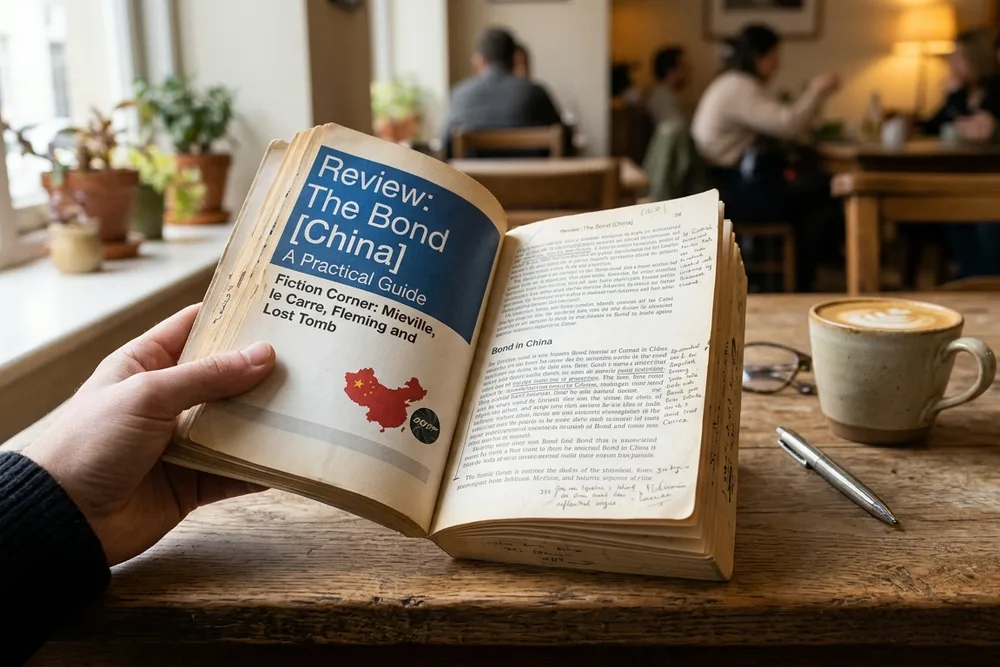
The “About the author” block is easy to skip and often the best trust signal on the page. For a China book, check three things.
First, does the author read Chinese and have lived or worked experience there? A history of China written without access to Chinese-language sources can still be good, but you should know. Second, is the author an academic, journalist, practitioner or novelist? A journalist like Richard McGregor writes differently from an economist like Barry Naughton. Third, when was the book written? China changes fast, so a 2010 book on its politics is history, not current analysis.
For finance titles, check whether the author has worked in a bond or banking role. For fiction, check whether the book is a translation and who translated it, since that matters a lot with long Chinese web novels.
Book Recommendations: Where to Start With China
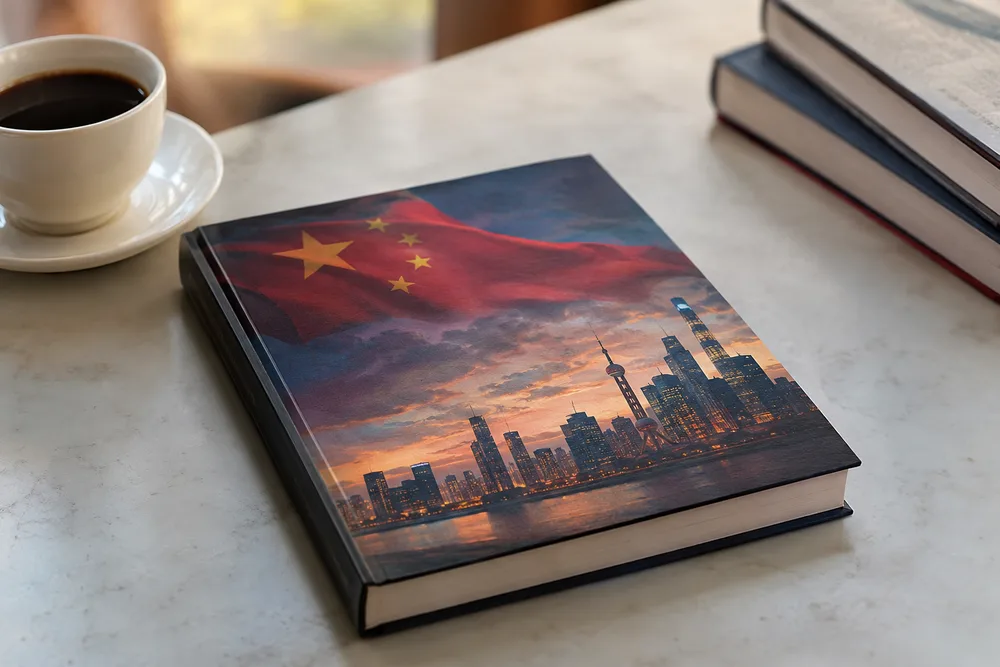
A common question on book forums goes like this: do you want something for pre-imperial China? Imperial China? Modern China? Overviews or monographs? That’s the right question to ask first, because “a book about China” covers about three thousand years.
Another reader’s version: “I’m more focused on and interested in modern China, meaning the last 200 to 300 years.” Here’s a starter map by era.
| Era | Good entry point | Type | Why it works |
|---|---|---|---|
| Pre-imperial (before 221 BCE) | Sima Qian, Records of the Grand Historian (selected translations) | Primary source | The foundational ancient history, readable in excerpts |
| Imperial (221 BCE to 1912) | The Cambridge History of China (multi-volume) | Reference | Authoritative but dense, better dipped into than read straight |
| Late Qing and Opium Wars | Julia Lovell, The Opium War | Narrative history | Argues the war’s meaning, not just its events |
| Modern (1800s to today) | Jonathan Spence, The Search for Modern China | Overview | A long but classic survey |
| Communist era | Jung Chang, Wild Swans (1991) | Family memoir | Personal view of three generations of women |
| Today’s politics | Richard McGregor, The Party | Journalism | How the party operates behind the scenes |
| Today’s economy | Barry Naughton, The Chinese Economy | Textbook | The standard reference on reform and growth |
If you are new to the topic, read one overview and one memoir. The overview gives the timeline, and the memoir makes it human. Add monographs only when a single topic grabs you.
A forum tip: “Bonding: The Ultimate Guide” by Gina Morris
One thread describes Gina Morris’s “Bonding: The Ultimate Guide” as hilarious and wonders why it isn’t recommended as often as Cursed Legacies. I haven’t verified the book’s details, so treat it as a community tip rather than a confirmed pick. If it interests you, read the sample pages and the 3-star reviews before buying. It also has nothing to do with China, so it belongs in your general fiction pile, not your history stack.
How the CCP Actually Runs the Country
Many readers ask for books on how the CCP actually runs the country, how government and the private sector interact, and what China’s goals are for socialism. Those are three separate questions, and each has a different best book.
How the Party runs things. Richard McGregor’s The Party (2010) describes the Communist Party’s control of appointments, the military, state companies and the media. It’s journalism, not theory, so it reads quickly.
How state and private business interact. Barry Naughton’s The Chinese Economy covers reform, state-owned enterprises and private firms. It’s a textbook, but it’s the one economists keep citing. Dan Wang’s Breakneck (2025) offers a newer, more readable argument about China as an “engineering state.”
What “socialism with Chinese characteristics” means. Official party documents are the primary source here, and academic commentary helps interpret them. Read these with a critical eye, since the phrase has shifted meaning across leaders.
One practical habit: when a book is more than five years old, pair it with recent reporting. China’s regulatory stance toward private tech, property and education has swung sharply in the last few years.
China’s Rapid Social Change: The One-Child Policy and “Lying Flat”
Plenty of readers say they find China’s rapid social changes fascinating, both forced (the One Child Policy) and unforced (the “lying flat” movement). They’re a good pair to study, because one was imposed from above and the other grew from below.
One Child Policy. Introduced around 1980 and relaxed in 2016 to two children, then to three in 2021. Mei Fong’s One Child (2016) is a readable account of how it affected families, including the gender imbalance and the “little emperor” generation.
Lying flat (tang ping). A 2021 online movement in which young people rejected the long-hours, high-pressure work culture. It’s often discussed alongside the “996” schedule (9am to 9pm, six days). It was more a mood than an organised movement, and commentary on it is mostly articles and essays, not books yet.
| Change | Type | Driver | Where to read |
|---|---|---|---|
| One Child Policy | Forced, state-led | Population control goals | Mei Fong, One Child |
| Relaxation to two, then three children | State reversal | Falling birth rate | News and demography reports |
| Lying flat | Unforced, grassroots | Work pressure, housing costs | Essays and long-form journalism |
Is Wild Swans Still Worth Reading?
Yes. Wild Swans: Three Daughters of China, by Jung Chang (1991), follows three generations: the author’s grandmother, her mother and herself. It runs from the warlord era through the Communist revolution and the Cultural Revolution.
Its strength is the detail of ordinary life under big political change. Its limit is that it’s one family’s story, and some historians have argued with how Chang handles certain political claims. Read it as a memoir, not a neutral textbook, and pair it with an overview like Spence’s.
A good reading order for a beginner: Wild Swans first for the human stakes, then The Search for Modern China for the timeline, then McGregor for the present.
Fiction Corner: Mieville, le Carre, Fleming and Lost Tomb
Some of the questions in this SERP are about fiction, and they deserve straight answers.
“I’m a big fan of Kraken. Iron Council is good. Never clicked with Embassytown, though.”
That’s a common split among China Mieville readers. Kraken (2010) and Iron Council (2004) are set in worlds that feel grounded in cities and politics. Embassytown (2011) is science fiction built around an alien language, which is more abstract. If Embassytown didn’t click, try The City and the City next, a police procedural with a clear hook. Mieville has nothing to do with China, despite the name, but the search overlap is real.
James Bond novels vs. le Carre
One reader said Dr. No, From Russia with Love, Thunderball, On Her Majesty’s Secret Service and Goldfinger are likely the most book-accurate films. They’re all based on Ian Fleming novels (From Russia with Love in 1957, Dr. No in 1958, Goldfinger in 1959, Thunderball in 1961, On Her Majesty’s Secret Service in 1963).
Another reader argued James Bond is passe, a known quality, like a bedtime story, while each le Carre novel reveals something different. That’s a fair summary of the split. Fleming writes adventure with a fixed formula. John le Carre writes moral ambiguity and bureaucratic spycraft, and his worldview evolves across books.
| Author | Tone | Best starting book | Reader who’ll like it |
|---|---|---|---|
| Ian Fleming | Glamorous, fast, formulaic | Casino Royale or Goldfinger | Wants adventure and period style |
| John le Carre | Bleak, subtle, political | Tinker Tailor Soldier Spy | Wants moral complexity |
| China Mieville | Weird, political, inventive | The City and the City | Wants fantasy with ideas |
The lore behind The Lost Tomb series
The Lost Tomb refers to Daomu Biji (also called Grave Robbers’ Chronicles) by Xu Lei, a hugely popular Chinese web novel series that began online in the mid-2000s. It follows Wu Xie and his companions, including Zhang Qiling and Wang Pangzi, through tomb-raiding adventures with a long-running conspiracy plot. It has been adapted into web series and films.
The lore is dense, so newcomers should check a spoiler-free reading order before jumping in. Translation quality varies, which is why the translator note on the listing matters.
China and US Treasuries: What the “Lowest Since 2008” Headlines Mean
One of the most clicked-on sides of this keyword is a finance video headlined “China DUMPS US Bonds to the Lowest Since 2008, $633 Billion Left, US Borrowing Costs EXPLODE.” Let’s separate the facts from the framing.
What’s solid
- China’s holdings of US Treasuries have fallen from a peak of about $1.3 trillion around 2013.
- The US Treasury publishes holdings by country in its TIC (Treasury International Capital) data, released monthly with a delay.
- Reports in 2025 noted that the UK edged past China as the second largest foreign holder, behind Japan.
- The $633 billion figure is the one used in that headline. Check the current TIC table yourself, since the number moves each month.
What’s overstated
“Dumps” implies a deliberate, sudden sale. TIC data shows holdings, which can drop because of maturing bonds not being replaced, valuation changes, or shifts into custodians in other countries (like Belgium) that don’t show up as “China.” And “borrowing costs explode” rarely follows from one country’s holding falling, since the Treasury market is enormous and has many buyers.
| Claim in headline | What the data can support | What it can’t |
|---|---|---|
| China holdings at lowest since 2008 | Possible, verify in TIC tables | Doesn’t prove a political motive |
| “Dumps” | Reduced holdings over a decade | Doesn’t prove a rapid sell-off |
| “US borrowing costs explode” | Yields respond to many factors | Single-country holding is not the driver |
A fair reading: China has been slowly diversifying away from Treasuries, partly into gold and other assets, but the picture is gradual, not a single event.
Why Chinese Investors Buy Chinese Government Bonds
A separate finance headline reads: weak take-up of loans, low deposit rates and a “shortage of bonds in the market” were driving demand for China’s sovereign debt. In plain terms, savers and institutions had few attractive places to put money, so they bought government bonds.
When demand goes up, bond prices rise and yields fall. China’s 10-year government bond yield dropped below 2% in 2024, hitting multi-year lows. That tells you investors were worried about growth and wanted safety.
Here’s the logic in four steps:
- Businesses and households borrow less, so loan demand is weak.
- Banks cut deposit rates, so saving in banks pays less.
- Safe assets are in short supply, so government bonds look attractive.
- Heavy buying pushes yields down.
This is a different story from the Treasury headline above. One is about China as a seller of foreign bonds. The other is about Chinese buyers of domestic bonds.
Is the Bond Market Really “the Bible” for Investing?
Someone once said the bond market is “the bible” for investing. The idea is that bond yields, especially government ones, set the baseline return (the “risk-free rate”) that every other asset gets measured against. When yields rise, stocks and property often look less attractive by comparison.
It’s a useful rule of thumb, but not scripture. Bond yields reflect expectations about inflation, growth and central bank policy, and those expectations can be wrong. For beginners, an industry resource like the ICMA’s guide to definitions and best practice is a good place to learn the vocabulary.
FAQ
What is “The Bond” in China?
The Bond usually means the 2021 Chinese family drama Qiao Jia De Er Nu. The same words also match finance articles about Chinese government bonds and book listings. Check which one you want in the table near the top of this guide.
Is the 2021 Chinese drama The Bond worth watching?
It suits viewers who like slow, character-driven family stories. Read at least one detailed review, such as Drama Sanctuary or the r/CDrama thread, to see whether the pacing fits you. Verify episode count and streaming availability on a drama database.
Which book should I read first to understand modern China?
Start with Jonathan Spence’s The Search for Modern China for the timeline, then Jung Chang’s Wild Swans for the human experience. If you care about current politics, add Richard McGregor’s The Party.
Did China really dump US bonds to the lowest since 2008?
China’s Treasury holdings have fallen for years, and a figure near $633 billion has been quoted. But “dump” overstates it. Holdings drop through maturities, valuation changes and custody shifts, and no single country’s holdings decide US borrowing costs. Check the US Treasury’s TIC data for current numbers.
What books explain how the CCP runs the country?
Richard McGregor’s The Party explains party control of appointments and institutions. Barry Naughton’s The Chinese Economy covers how state and private business interact. Dan Wang’s Breakneck gives a newer argument about China’s engineering-focused state.
If I liked Kraken and Iron Council but not Embassytown, what next?
Try China Mieville’s The City and the City, a detective story with a strong central idea. It’s more grounded than Embassytown and closer in feel to his city-focused novels.


Body Mist Guide: Best Body Mists in Pakistan for Everyday Freshness
Body mist guide for Pakistan: prices in PKR, where to buy, long-lasting picks from Phlur to Bath & Body Works, and tips to make the scent last all day.

Lattafa Pakistan: 10 Best Perfumes, Prices & Clones 2026
Shop Lattafa Pakistan the smart way: 10 best perfumes, real prices in PKR, authenticity checks and where to buy in Karachi, Lahore and Islamabad.

Creed Aventus Price in Pakistan (2026): Original vs Budget Alternatives
Creed Aventus price in Pakistan: original 100ml is listed near Rs 119,000 to 135,000. Compare sizes, fake checks, used value and local clones.